

2025: The Year of Pitiful Men
An examination of the cultural landscape that allowed male grievance to flourish in 2025.

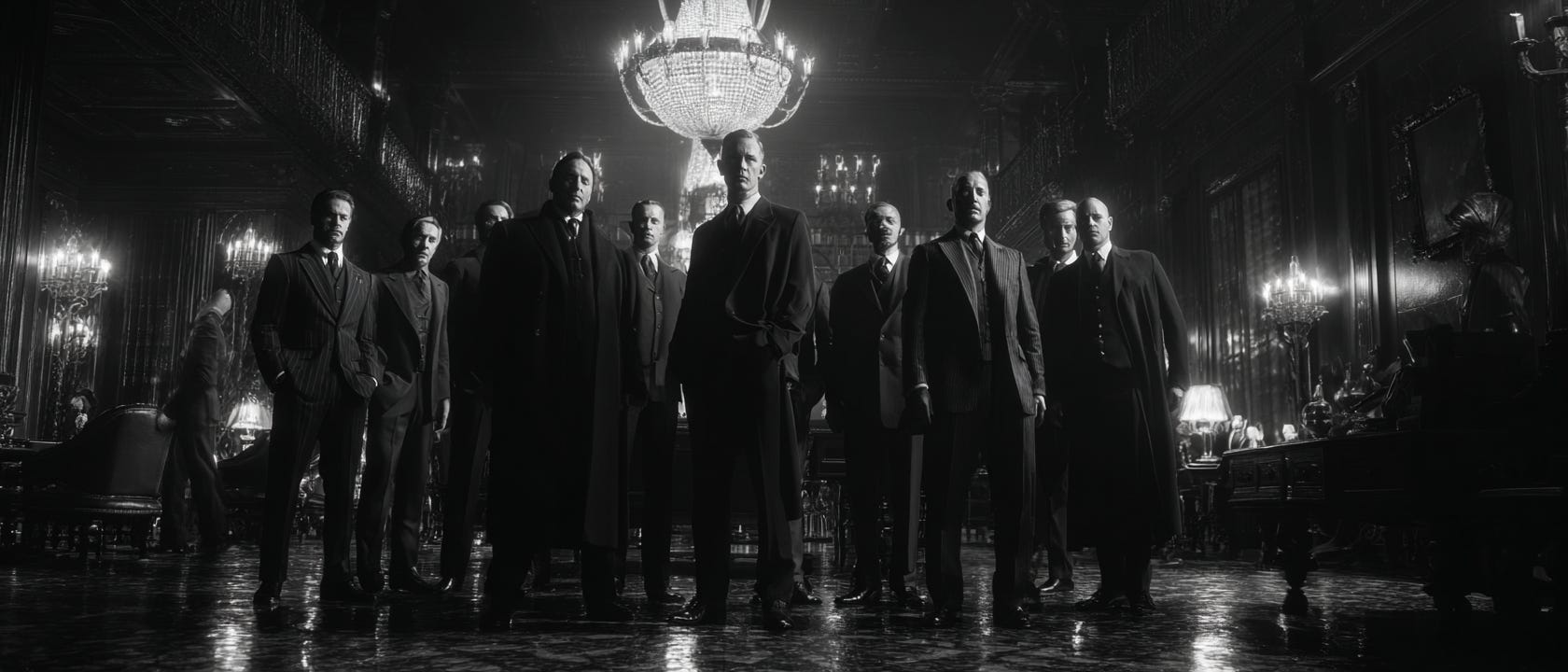
At midnight, the calendar did what men like this always do: it pretended the past could be scrubbed clean with a single, theatrical gesture.
A countdown. A kiss. A toast. A fresh start.
But 2025 didn’t arrive softly. It arrived with a sneer.
It came in on the momentum of Kamala Harris losing the presidential race to Donald Trump—the kind of loss that doesn’t just end an election cycle, it releases a cultural scent. A permission structure. A new confidence in old cruelty. And then, on January 20, 2025, Trump was sworn in again—now as the 47th president—making grievance feel official, like it had been stamped and notarized.
This is what people miss when they talk about “polarization” like it’s weather. Misogyny doesn’t just linger. It organizes. It recruits. It learns new language. It finds new microphones. And in 2025, it came for revenge—not because women changed, but because women refused to shrink back into dependence.
So yes. 2025 was the year of pitiful men.
Not the cinematic villains. Not the competent patriarchs with real power. Not the men who actually move through the world with calm dominance. No—this was the year of the rejected men, the dumped men, the men who confuse their loneliness with entitlement. The virgins with rage budgets. The jobless prophets of “traditional values” who can’t manage a load of laundry. The ugly men who treat their own reflection like a political crisis. The angry men whose entire masculinity depends on a woman agreeing to pretend they’re impressive.
And if you’re tempted to laugh, I get it. Pitiful men are funny—until you realize they don’t come for comedy. They come for control.
They don’t want partnership. They want access.
What follows is my countdown—the audit trail. Ten tells that 2025 wasn’t just a bad year for gender politics; it was the year male grievance learned to dress itself up as culture again.
10. The Comeback That Made Every Rejected Man Feel Chosen
Trump’s return didn’t just restore a politician. It restored a mood: the belief that a man can be publicly disgraced and still be crowned as rightful authority, while women are expected to be perfect just to be tolerated. The nonconsecutive comeback—45 and 47—functioned like a masculine resurrection story.
If you’ve ever been dumped by a woman you thought you deserved, 2025 told you: don’t evolve. Don’t reflect. Don’t become tender or accountable. Just wait. Rage long enough, and the world will reward you for refusing to grow.
That’s the core promise pitiful men worship: not redemption, but vindication.
9. The “Predator in Chief” Era—When Adjudication Didn’t Disqualify Masculinity
I’m going to say something plainly because this is the year for plain speech: when a civil jury finds a man liable for sexual abuse and defamation, and he still ascends, you are not living in a society that merely “disagrees.” You are living in a society that has decided women’s bodies are collateral.
The E. Jean Carroll verdict and the subsequent upholding of major damages did not end Trump’s political viability; it clarified what kind of masculinity the culture is willing to defend at any cost.
This is why “predator in chief” lands. It isn’t just an insult. It’s a diagnosis of a national fetish: the insistence that male power should remain untouched by consequence, even when consequence has been stamped into court record.
And pitiful men watched that and learned the lesson they wanted: if he can, so can I.
8. The Manosphere as a Vending Machine for Masculine Delusion
People keep calling the manosphere “online discourse” like it’s a harmless sandbox.
In 2025, it looked more like infrastructure—an entire economy built on teaching men to interpret women’s autonomy as an attack.
There’s reporting and analysis connecting Trump’s gains among young men to the influence of manosphere-adjacent creators and platforms: podcasts, streamers, pseudo-intellectual “debate” content, grievance-as-entertainment.
Here’s the scam: they sell young men a dream that doubling down on machismo will get them the girls, the respect, the power. But they’ve taken the macho out of machismo. What’s left is performance without courage—posture without protection, dominance without competence.
The grifters have names. Andrew and Tristan Tate, arrested in Romania on human trafficking charges they deny, became icons of “red pill masculinity” to a generation of boys who mistake cruelty for strength. Fresh & Fit hosts turned dating advice into a content mill for male resentment. Sneako, Adin Ross, Nick Fuentes—streamers and provocateurs who built audiences by making misogyny feel like rebellion.
These aren’t fringe weirdos anymore. They’re the pipeline. They’re where young men go to learn that women are the problem, that feminism stole their birthright, that submission is owed.
And here’s what makes it so pathetic: it’s the softest men in the room pretending toughness is a personality. And then crying like it’s a civil rights issue when a woman says, “No.”
7. “Just Asking Questions” as a Disguise for Cruelty—and the Rise of Podcast Authority
No disrespect to podcasters. Truly. I write a blog. I’m not about to pretend the internet is beneath me while I’m standing inside it.
But when a podcaster’s couch becomes a more powerful civic institution than a senator’s office, we haven’t “lost the plot.” We lost the entire concept of plot. The big picture isn’t blurry—it’s gone. Not misplaced. Not misframed. Gouged out. We’re groping around in a different room, convincing ourselves we’re still looking at the same wall.
Because what does it mean, exactly, when the softest men alive—men whose primary credential is “I talked for three hours”—can shape political reality more efficiently than the people whose job is to govern? It means the country has started confusing attention with authority.
It means we’ve decided that the man with the mic is more legitimate than the woman with the policy brief. And the manosphere loves this arrangement, because it was built for it: grievance packaged as content, rage sold as identity, misogyny delivered in “just asking questions” wrapping paper.
This is how the grift scales. Politics moves into podcasting not because it’s better discourse, but because it’s lower friction power: longform intimacy, no fact-check in real time, no accountability structure, and a parasocial bond that makes a listener feel like they know the host—and therefore can trust the worldview being smuggled in. And in the same cultural moment, we watched the “manosphere” ecosystem function less like a fringe subculture and more like a recruitment pipeline—especially among young men—where male grievance becomes a lifestyle brand and women become the enemy that explains everything.
So when I say we’ve fallen, I’m not being dramatic. We’re not teetering on the edge. We fell off the cliff, hit the bottom, rolled downhill, fell off the next cliff, landed in a ditch, and then the ground opened up under the ditch. We are in the cartoon phase of decline—where the fall keeps inventing new physics just to keep going.
And pitiful men love plausible deniability because it lets them be vicious without being held responsible for being vicious. They are always “just asking questions.” Always “just playing devil’s advocate.” Always “concerned” about women’s choices, women’s bodies, women’s standards—never concerned about their own emotional immaturity. And the manosphere has perfected this rhetorical technique: if you can force a woman into endless explanation, you can drain her energy while pretending you’re the reasonable one.
I don’t need plausible deniability. If I’m going to insult you, I’ll do it clean. To your face. With my full chest. And I will sleep beautifully afterward.
The saddest part is this: the men who benefit from this system want you to think it’s strength. It isn’t. It’s mass-produced fragility with a sponsorship deal.
6. The Three-Minute Men—Sexual Entitlement Dressed Up as Masculine Pride
Let’s talk about the intimate version of pitiful.
The three-minute men. The men who always come first and then act confused when you aren’t moved by their “effort.” The men who treat being good in bed like some optional elective, like pleasure is a luxury item women should be grateful to receive, rather than the baseline of a mutually desired encounter.
And the truly pitiful subset: the men who refuse to give, but demand submission. The ones who won’t eat, but expect women to get on their knees.
I’m not describing kink. Kink has consent and competence and care. I’m describing entitlement—a man calling his laziness “dominance,” his selfishness “alpha,” his inability to please a woman “biology.”
2025 was full of that kind of masculinity: performative, brittle, parasitic. Men who wanted the aesthetics of power without any of the responsibility that comes with it. Men who thought “taking charge” meant taking without giving. Men who wouldn’t know a female orgasm if it punched them in the face—or put their head in a vice.
5. Chivalry Didn’t Die. They Never Had It.
We keep saying “chivalry is dead” like something noble was lost.
But here is what 2025 revealed: a lot of these men don’t even like women. They desire women the way they desire status. They want access the way they want a promotion. They want the optics of a girlfriend, a wife, a girl to post, a body to claim—without the actual labor of cherishing another human being.
When men don’t like women, intimacy becomes conquest. Romance becomes a hostage situation with better lighting. And the moment women refuse to perform gratitude for being chosen, these men turn hostile because their desire was never affectionate. It was acquisitive.
This is what started to become so clear in 2025: the question wasn’t “what happened to the days when men liked women?” The question was: did they ever?
Because the men demanding traditional roles can’t even perform traditional protection. These are the dudes who, if there’s a gunman in the building, are using you as a human shield. Hands down. No question. This dude is doing a George Costanza—pushing women and children out of the way—and doesn’t see anything wrong with it.
4. Petty Became Presidential. And Every Small Man Felt Seen.
If Obama brought sexy back to the White House, Trump brought petty back to the White House.
Petty as policy. Petty as posture. Petty as aesthetic.
And pitiful men recognized themselves in it instantly: the grievance, the obsession with humiliation, the compulsive need to “win” at the cost of dignity. They didn’t just vote for him. They modeled themselves after him.
Because nothing flatters a small man like a big platform for small emotions.
This is what 2025 normalized: the idea that being emotionally stunted, vindictive, and consumed by revenge fantasies isn’t pathological—it’s presidential. It’s leadership. It’s strength.
It isn’t.
It’s just permission for every man who’s ever been rejected to believe his bitterness deserves a microphone and a cabinet position.
3. “Your Body, My Choice”—The Mask Fully Off
This is the moment the essay stops being funny.
After the election, misogynistic harassment surged online, including the spread of “your body, my choice” as a taunt and threat—amplified in public by far-right figures and then echoed by men who wanted to test how much cruelty they could get away with.
It wasn’t subtle. It wasn’t coded. It wasn’t an accident.
It was a declaration: the fantasy isn’t just controlling policy. The fantasy is controlling you. The mask was never there to protect women; it was there to protect men from consequences while they pursued the same old agenda.
And now, with political power aligned to the most cynical forms of “leave it to the states” reproductive cruelty, the cultural message became: women’s autonomy is negotiable again.
When a man says “your body, my choice,” he is not talking about politics. He is rehearsing ownership.
The pro-life people have always included a faction that was never about life—they were about control, about ensuring women couldn’t escape dependence, couldn’t make choices that didn’t center male authority. And in 2025, the mask came off. They stopped pretending it was about babies and started saying the quiet part out loud: they want your body under their jurisdiction.
This is the danger. Not the comedy. The danger.
2. “Low IQ” as a Leash—Because They Cannot Stand Being Outshined
They always come for Black women’s intellect because Black women’s competence breaks the script.
When Trump calls a Black congresswoman “low IQ,” he isn’t making an argument. He is performing a ritual: discipline the woman who refuses submission by trying to make her brilliance illegible. The insult is supposed to shrink her, and it’s supposed to remind everyone watching that Black women do not get to win openly without being punished.
Why “low IQ”? Because in their world, Black women are not supposed to be out-competing them, out-speaking them, out-strategizing them. It feels like theft to men who believe entitlement is a birthright. They experience a Black woman’s excellence as an assault on the natural order.
And here is the secret they don’t want named: the insult is a confession. It admits, indirectly, that she is beating them on the field they thought they owned.
2025 made it clear: they cannot stand that they’re being outshined, out-competed, out-everything by Black women. And because they can’t rise to meet the standard, they try to lower the ceiling. They try to redefine intelligence itself so that her brilliance doesn’t count.
It’s just not fair, they say. It’s not fair.
And they’re right about one thing: it’s not fair. It’s not fair that they were told the world belonged to them and now they have to earn it like everyone else.
1. The Humiliation Fetish—Because They Can’t Metabolize Rejection
Pitiful men cannot process rejection as information. They process it as humiliation, and then they build their identity around revenge.
That is why they need to “take women down.” That is why they want women to beg, to apologize, to explain, to plead. They are trying to reverse the shame. They want to move it from their bodies into yours.
They’re not strong enough to sit with the truth: you weren’t rejected by women because feminism corrupted them. You were rejected because you offered nothing that felt safe, generous, or worth the risk.
And because they cannot endure that truth, they try to manufacture a world where women are forced into dependence again—economically, legally, sexually, socially.
That is the architecture of 2025: male grievance as governance; humiliation as intimacy; access as entitlement; cruelty as a substitute for self-respect.
This is what they want. And this is what we have to understand if we’re going to refuse it clearly.
In 2026, We Are Not Negotiating with Pitiful Men
So here is my final audit line, written with the calm of a woman who has seen the pattern and is no longer seduced by it:
In 2026, we are not negotiating with pitiful men.
You had your year. You got your sad, manly tears. You got your grievance podcasts and your group-chat courage. You even got your president back—sworn in, again, holding the lives of the world in his hands like a dare.
Now you don’t get access.
You get distance. You get silence. You get women who stop explaining. You get women who stop auditioning for your approval. You get women who remember that autonomy is not a vibe; it’s a practice.
And if you call that cold, I’ll accept the compliment.
Because the opposite of pitiful men isn’t nicer men.
It’s women who stop feeding them.

© 2026 Powerhouse Novelas LLC. All rights reserved.