

The Fear of Powerful Women
The Disruption of Traditional Power Dynamics by Confident Women

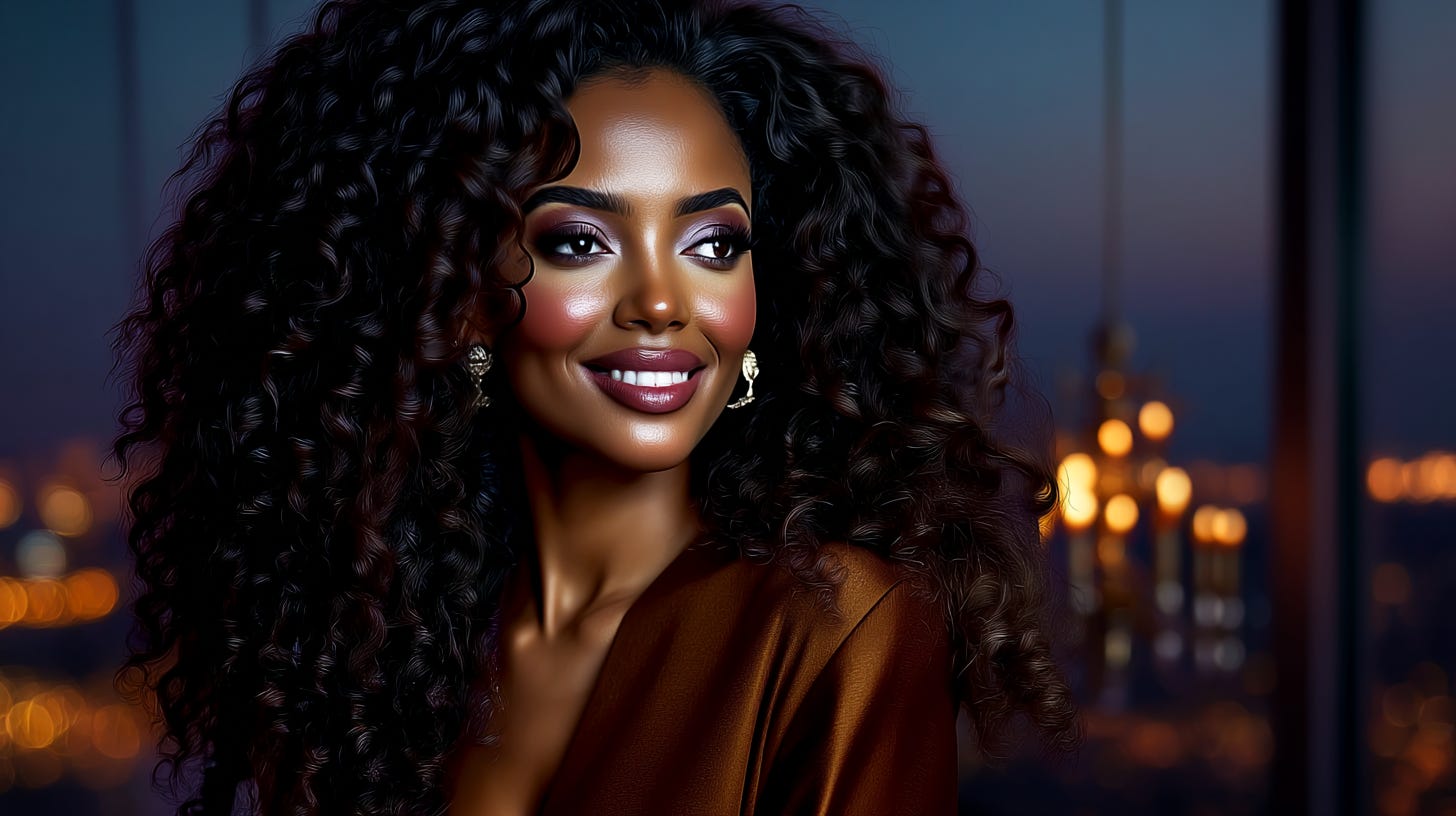
There is a specific kind of fear that powerful women provoke, and it has nothing to do with what we do. It has everything to do with what we disrupt.
Men are taught to understand power in linear terms: hierarchy, domination, control. When a woman embodies power without mirroring masculinity—when she is neither deferential nor aggressive, neither apologetic nor performative—it short-circuits that framework. She becomes difficult to categorize.
And what cannot be categorized cannot be safely managed.
You can see this fear clearly when men encounter women who are confident, sexually autonomous, and intellectually precise. The response is rarely neutral. It oscillates between fascination and hostility, attraction and aggression. Fight or fuck. Respect or erase. There is often no middle ground.
We saw this play out in the political arena when men were forced to contend with a powerful Black woman who did not fit the script. The calculation was visible. The offense was visceral.
It wasn’t just that she challenged authority—it was that she confused it. She didn’t behave like a threat men knew how to confront.
Powerful women destabilize because we expose the fiction. We demonstrate that authority is not inherently male. That leadership does not require permission. That sexuality and competence can coexist without apology. That power does not need to be loud to be effective.
Because of this, women like me learn early to modulate ourselves. We read the room. We assess the insecurity level. If the person across the table is fragile, we soften. We turn up agreeableness. We become less sharp, less direct, less ourselves. Not because we lack confidence, but because we understand the cost of triggering someone who cannot tolerate us.
When the person is secure, we relax. We allow more of the real version to emerge. This isn’t manipulation. It’s adaptation.
It’s how women survive in environments that punish authenticity selectively.
I’ve studied this psychology. I’ve lived it. And the hardest truth I’ve learned is this: you cannot change people. You can only change how you move through the world. Adaptation keeps you alive. Commentary—naming what’s happening without internalizing it—keeps you sane.
Black women and women of color experience this scrutiny most intensely. Our competence is questioned. Our motives are dissected. Our authority is treated as suspicious. The forms vary by culture, but the dynamic is constant. We are examined not to understand us, but to contain us.
What unsettles people most is not that we understand power—it’s that we are no longer pretending not to.
I see the board. I’ve always seen it. And once you see it, you stop mistaking politeness for safety and aggression for strength. You learn when to speak, when to withhold, when to move, and when to let someone underestimate you long enough to expose themselves.
Power isn’t about domination. It’s about leverage. Timing. Precision.
That kind of power doesn’t announce itself.
It works quietly. And it lasts.
Monica Craiyon
Creator, Powerhouse Novelas | Erotic Power Fiction
Powerhouse Novelas is erotic power fiction—stories of devotion, dominance, restraint, obsession, and consequence. These are intimate economies of desire where consent is deliberate, pleasure is intentional, and power is never neutral.
Explore the MC’s Rooms → Member Home: Start Here
Become a Member → Subscribe to Powerhouse Novelas
Adult themes. 18+.
© 2026 Powerhouse Novelas LLC. All rights reserved.
